Plugins
Installing Plugins
-
1. Download plugins to a USB drive or microSD card
Use the Plugins link above.
Click "Download All" at the top. Unzip the "all_plugins.zip" file.
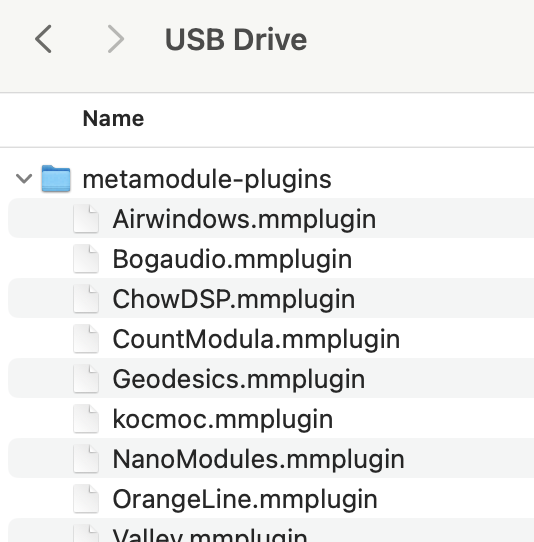
Copy the
metamodule-pluginsfolder to the USB drive or microSD card.If you want to just install particular plugins, download them individually, and copy the
.mmpluginfile to themetamodule-pluginsfolder on your USB drive or microSD card.You also can put the
.mmpluginfiles in the root directory of the USB drive or microSD card.Insert the drive into the MetaModule.
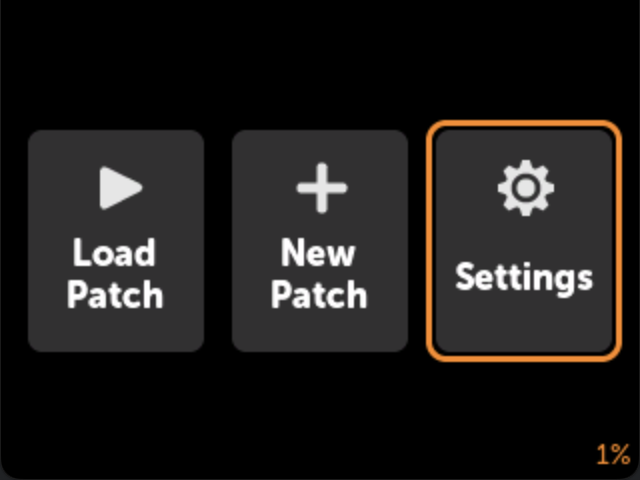
- 2. Click
Settingsin the Main Menu
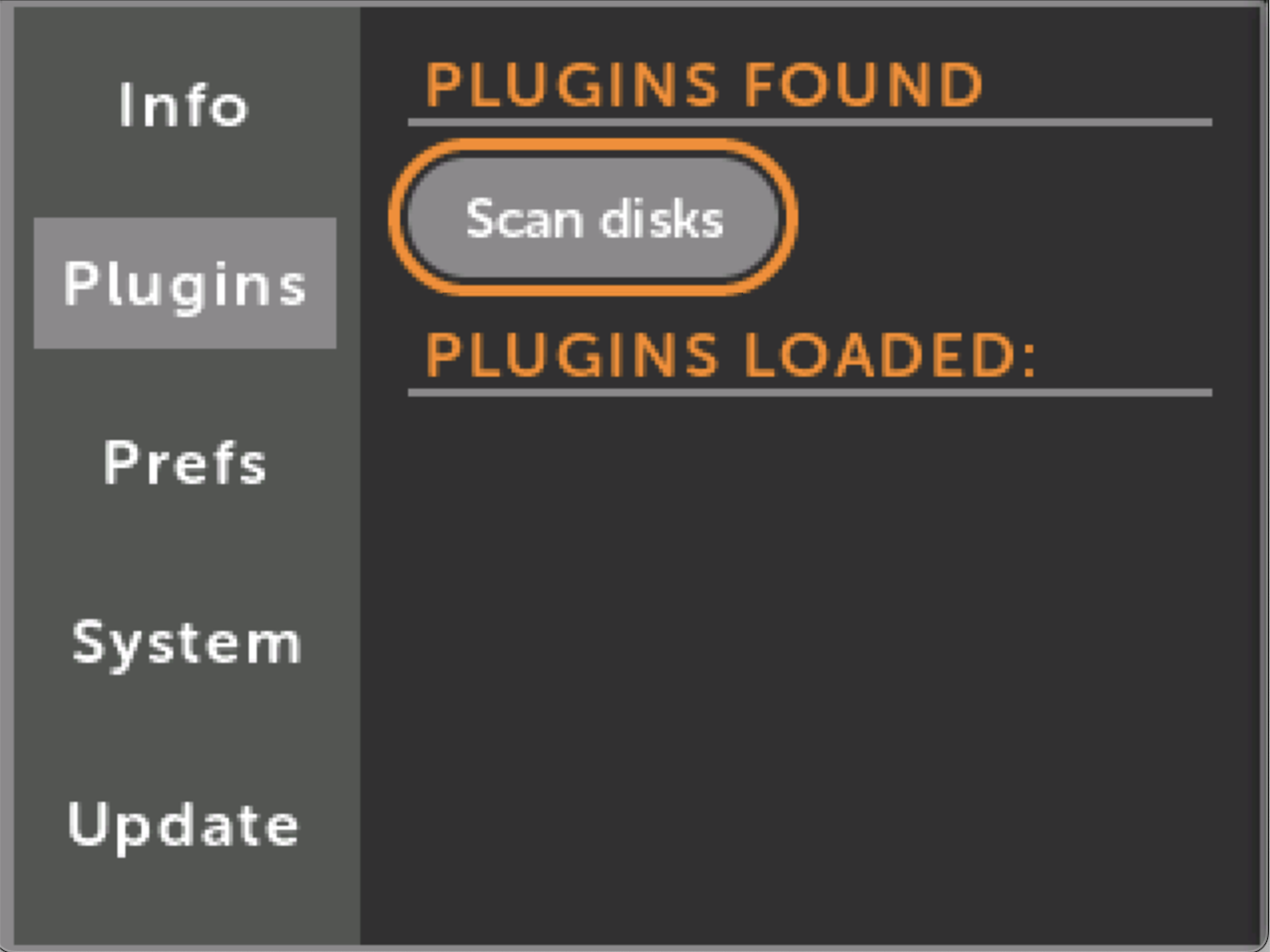
- 3. Click
Plugins
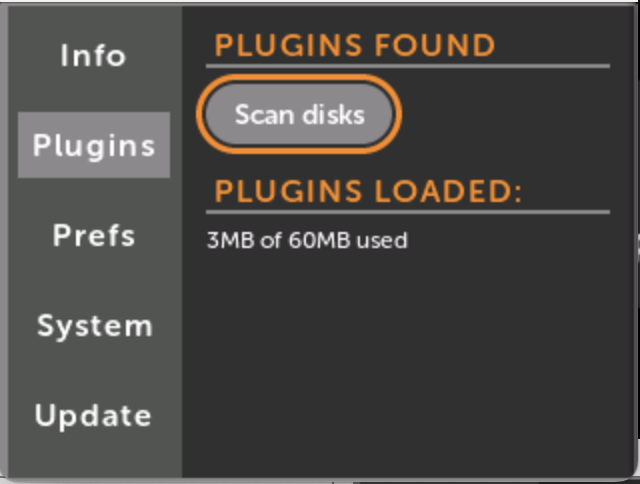
- 4. Click
Scan disks
-
5. Click a plugin to load it
The plugin will stay loaded until you unload it or reboot.
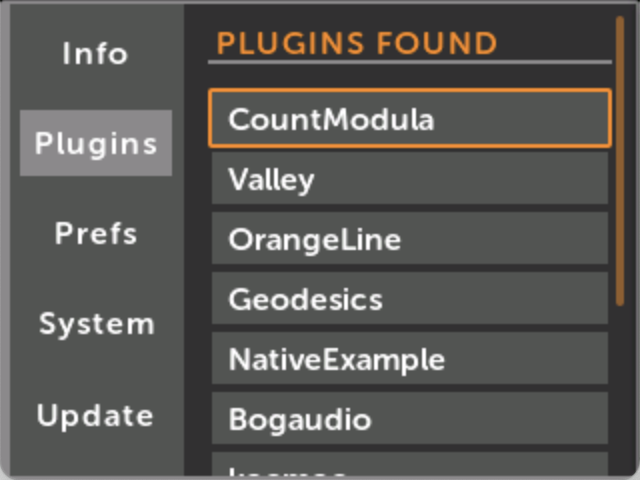
-
Or, load all plugins
Scroll to the bottom and click the
Load Allbutton to load all plugins found

Pre-loading Plugins
If you want a plugin to load automatically when you power on, you can tell the MetaModule to pre-load it.
A USB drive or microSD card containing the plugin file must be installed in the MetaModule when you power on for this feature to work. If not, you can load the plugin normally after startup.
-
1. Click a plugin name under
PLUGINS LOADEDIf the plugin is not yet loaded, then follow the instructions above.
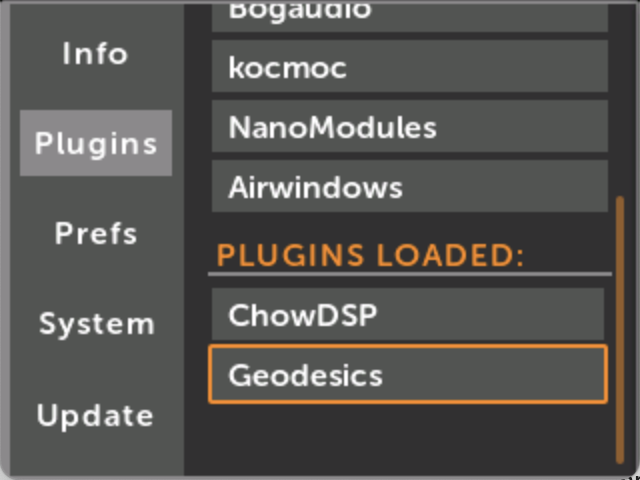
-
2. Enable Pre-load
The pre-load status of a plugin is saved when you exit the Plugins tab. The next time you power on, the MetaModule will search the USB drive and microSD card for a plugin with a matching name.
Note: The wrong version may get loaded if you have different versions of the same plugin on a microSD card and a USB drive, or different versions in the
metamodule-plugins/folder and in the root directory.
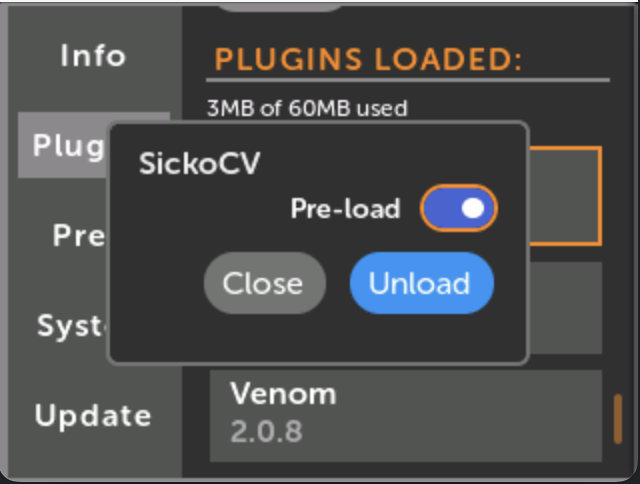
-
Or, Pre-load all the currently loaded plugins
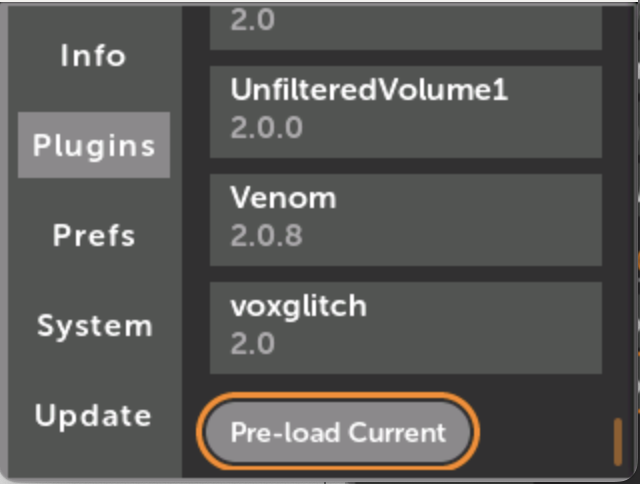
Click
Pre-load Currentat the bottom of the list of loaded plugins.The next time you power-on, the MetaModule will pre-load only the current set of loaded plugins.
Auto-loading Plugins
You can tell the MetaModule to load plugins only when needed. This is also known as "lazy loading".
In Settings > Prefs > Missing Plugins you can enable this by choosing "Ask" or "Always".
See Preferences for details.

For best results, keep a USB drive or microSD card installed on your MetaModule. The drive should contain the latest plugins.
Usage
Whenever you open or reload a patch file, the MetaModule will check if the patch uses any modules from plugins that aren't currently loaded. In "Ask" mode, a pop-up will listing the brands that are missing and ask you if you want to continue.
The MetaModule will scan the USB drive and microSD card for the latest version of the missing plugins and then load them.
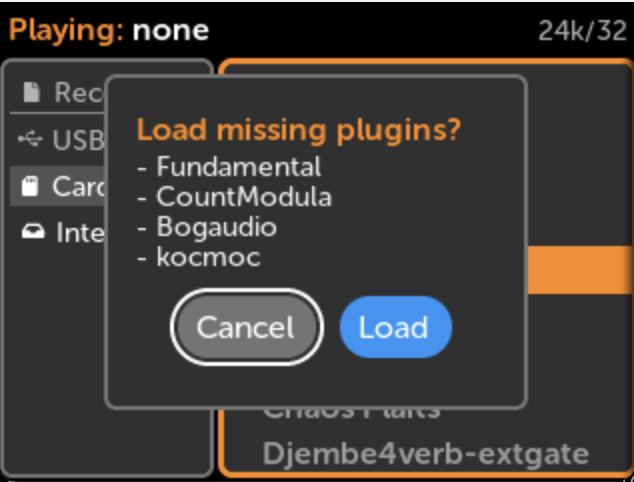
The auto-loader will run in any of the following situations:
- Clicking on a patch name from the Patch Selector page
- Clicking on the "Now Playing" or "Last Viewed" patch name
- Selecting "Reload" or "Revert" from the File Menu on the Patch View page
- Clicking on the Play button when a patch is paused or not playing
- Updating a patch via Wi-Fi or on disk
Specifically, the auto-loader will not be run if you press the Back button to navigate to the Patch View page.
Missing modules after auto-loading
After scanning for plugins and loading them, if there are still some missing modules, these will display in a pop-up. This could happen if the patch uses a module present in the VCV plugin but not present in the MetaModule plugin, or if the plugin could not be found.
Check the Plugins page to see if there are any updates to the MetaModule plugin.
When a plugin crashes or runs out of memory
Firmware v2.3.0 reworked how memory is handed out to plugins, so that problems caused by a single plugin don't take down the whole MetaModule.
Previously, a plugin that ran out of memory or misbehaved could freeze the MetaModule, and the only way out was to power cycle. Now, in most cases the MetaModule stays running and shows a notification telling you which plugin caused the problem, so you can try something else.
Messages you might see include:
Out of memory loading this patchOut of memory loading pluginOut of memory: not enough RAM to load pluginOut of memory: plugin code needs X MBPlugin crashed while initializingModule crashed while loading
If you see one of these:
-
Out of memory: the patch or plugin needs more RAM than is free. Try removing plugins you aren't using from the Plugins page, or using fewer or smaller modules in the patch. Modules that allocate large buffers — samplers, long delays, and some reverbs — use the most memory.
-
Crashed: the plugin has a bug. Check the Plugins page for an update to that plugin, and report it to the plugin's maintainer or on the MetaModule forum.
Recovering from a crash
A plugin that runs out of memory can be cleaned up completely, though not all plugins take advantage of this feature. Some crashes on some plugins may leave some memory unavailable until you restart. If you've hit several crashes in one session, a power cycle will reclaim that memory.
Checking free memory
The Settings > Info page shows how much RAM is in use. As of v2.3.0 it reports
the firmware and plugin memory separately:
- Main: memory used by the firmware and the running patch.
- Plugins: memory used by loaded plugins, and how much they have claimed.
The boundary between the two moves as needed, so this is the place to look if patches are failing to load.
Viewing the modules in a plugin
-
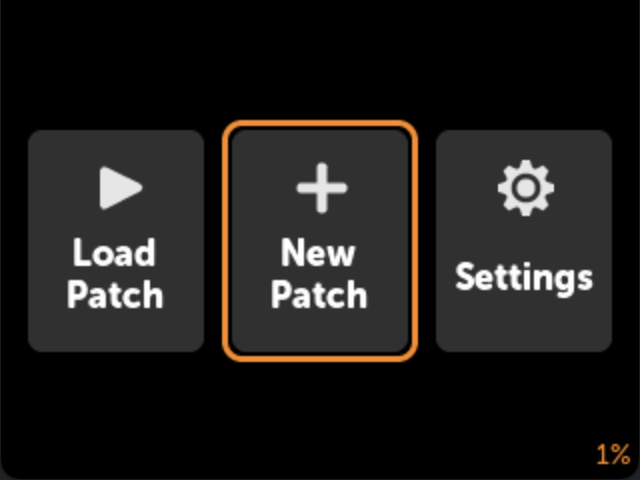
1. Click
New Patchfrom the Main MenuTo add a module to an existing patch, click the
+icon in the top button bar.
-
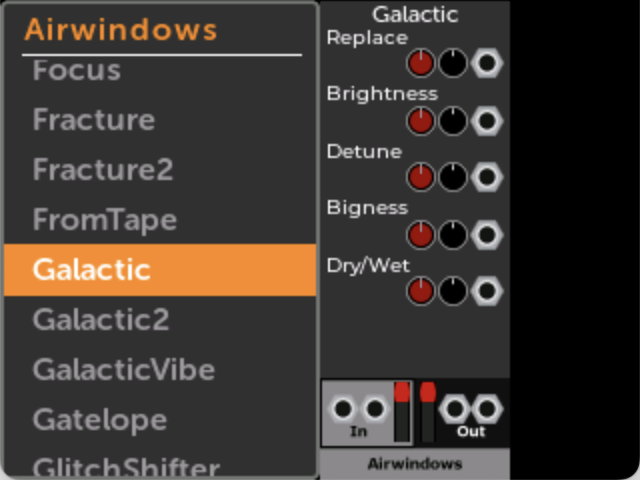
2. Click the name of the plugin, then browse the modules
Click once on any module to view it full-screen.
Click a second time to add it to the current patch.
Browsing Modules by Tag
In addition to browsing by brand, you can browse by Tag. Tags group modules by function (e.g. VCO, Filter, Sequencer, Reverb), making it easier to find a module type.
-
Click the sort button at the top of the module list
Toggle between Brand and Tag views.
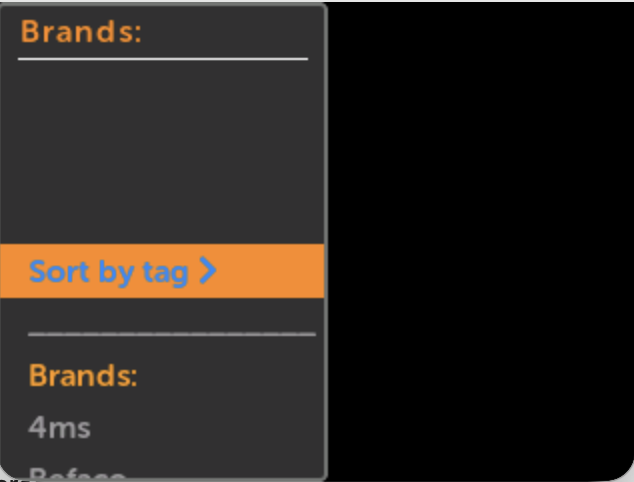
- In Tag view, choose a tag
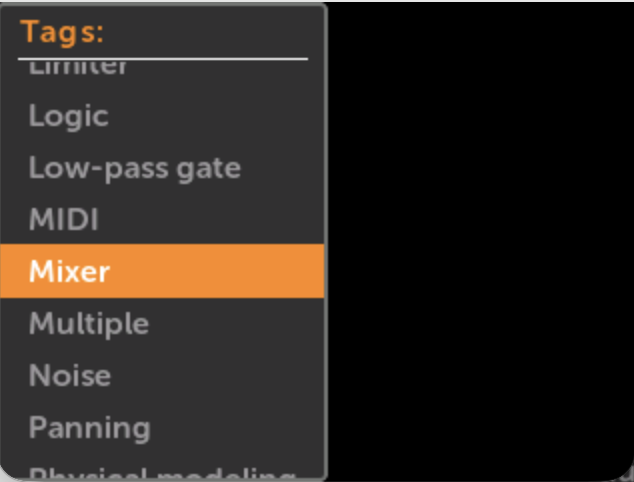
- Click a tag to see all modules with that tag
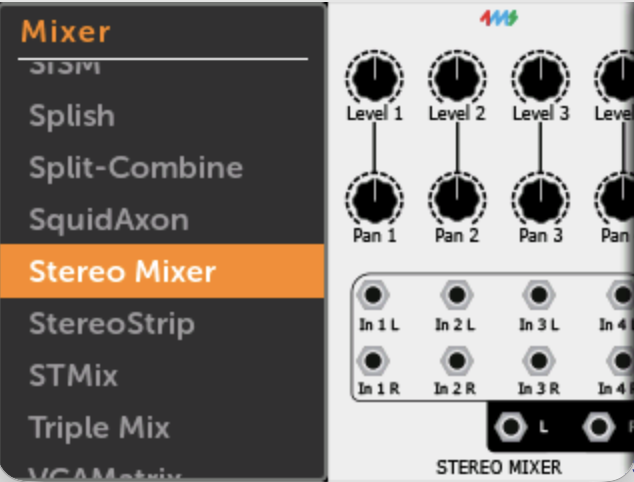
Tags follow the VCV Rack standard tag system, which consolidates related terms under one label. For example, "VCO", "Oscillator", and "Voltage Controlled Oscillator" all map to the same tag. Module tags are set by the plugin developer.
As a difference from the VCV Rack standard tag system, custom tags are allowed to appear in the MetaModule.